
Every year, millions chant, dance, and finally immerse Ganpati idols into rivers, lakes, or the sea. For most, it is an act of devotion. For some, it is a farewell. But beneath this ritual lies an esoteric wisdom so shocking and precise, it feels less like religion and more like consciousness science.
Was Ganpati Ever a God Outside You?
Shocker first: Ganesh isn’t a deity you bid goodbye to. The ancient rishis designed Ganpati as a psycho-spiritual archetype.
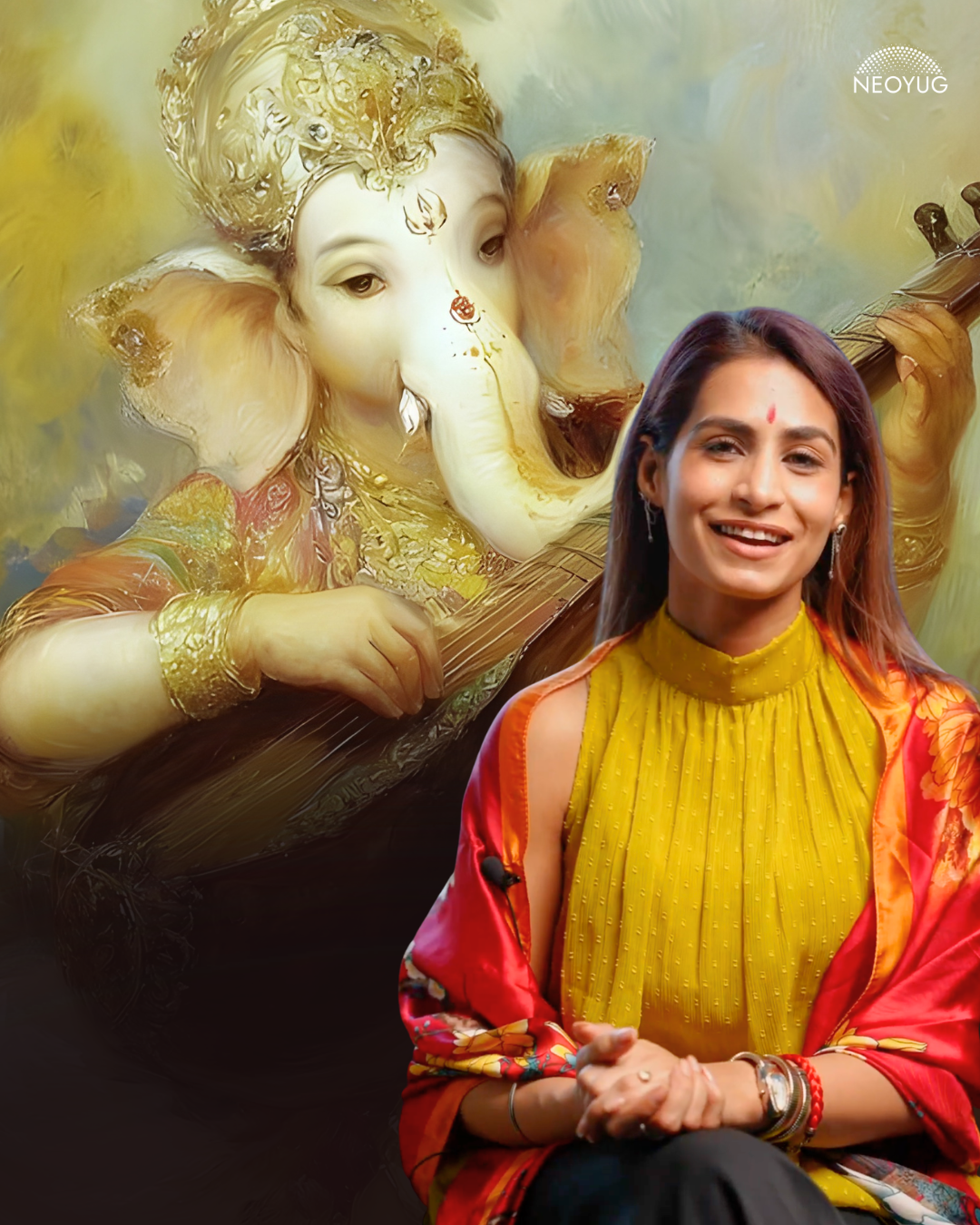
- His head (elephant) = the awakened higher mind.
- His large ears = the art of deep listening to the unspoken truth.
- His trunk = adaptability of consciousness, able to hold the finest (a needle) and the heaviest (a tree).
- His broken tusk = sacrifice of ego for wisdom.
Ganesh is the human mind, sculpted into sacred metaphor. Visarjan is not his farewell, it is your ego’s dissolution.
Why Is the Idol Placed in Water?
Why do we place him in water? Because water is the most ancient memory field known to humankind. Modern science has found that water “remembers” molecular imprints, vibration, and energy patterns.
By immersing Ganpati, ancient seers encoded two truths:
- Form dissolves. Essence remains. The clay dissolves in water, but the Ganpati-tattva (principle) merges into the collective field of consciousness.
- You are not worshipping an idol. You are rehearsing impermanence. Every immersion is a spiritual rehearsal for death teaching that nothing “ends,” it only transitions form.
Why Was the Idol Traditionally Made of Clay?
Traditionally, Ganpati idols were made from unbaked clay from the riverbanks. Why? Because clay is the same substance from which the Upanishads say human bodies were formed (“mitti se bana sharir”).
When we dissolve Ganpati back into water, it is a mirror ritual of the body dissolving into its elemental source. It was never about dumping idols, it was about teaching you “ashes to ashes, dust to dust, mitti to mitti.”
Is Visarjan a Goodbye or an Activation?
Most people think Visarjan means separation. Wrong. The esoteric texts say:
“Ganapati is installed outside so you may see Him, and immersed outside so you may feel Him within.”
By dissolving the external idol, the ancients ensured you would activate the inner archetype. After the visarjan, you’re meant to live as Ganapati, adaptive, wise, obstacle-transcending.
Letting go as something practised rather than performed once a year is the ground Mahaganapati Sadhana covers.
Does Ganpati Remove Obstacles or Dissolve Them?
Ganpati is called Vighnaharta. But here’s the twist: he doesn’t “remove” obstacles. He dissolves the illusion of them. Just like in quantum tunneling, particles don’t break barriers, they phase through them by shifting states.
Visarjan is that same metaphysical hack: dissolve form, transcend blockages, activate fluid consciousness.
How Does Visarjan Mirror Moksha?
The rishis designed visarjan as a public, collective rehearsal for liberation. You watch your beloved form dissolve. You cry, you resist, and yet you release. That is exactly what happens at death, your attachments scream, but the Self quietly merges into the Infinite.
Ganpati visarjan is not an end. It is a glimpse of eternity.
What Should You Remember at the Shore?
This Ganesh Chaturthi, when you stand at the shore for visarjan, remember:
- You are not immersing Ganpati. You are dissolving the ego.
- You are not ending worship. You are activating it inside you.
- You are not saying goodbye. You are witnessing the eternal cycle of form formless form again.
Ganesh does not leave. He only changes address, from the clay in your hands to the consciousness in your being.