The Paradox of Krishna
What Is the Paradox of Krishna?
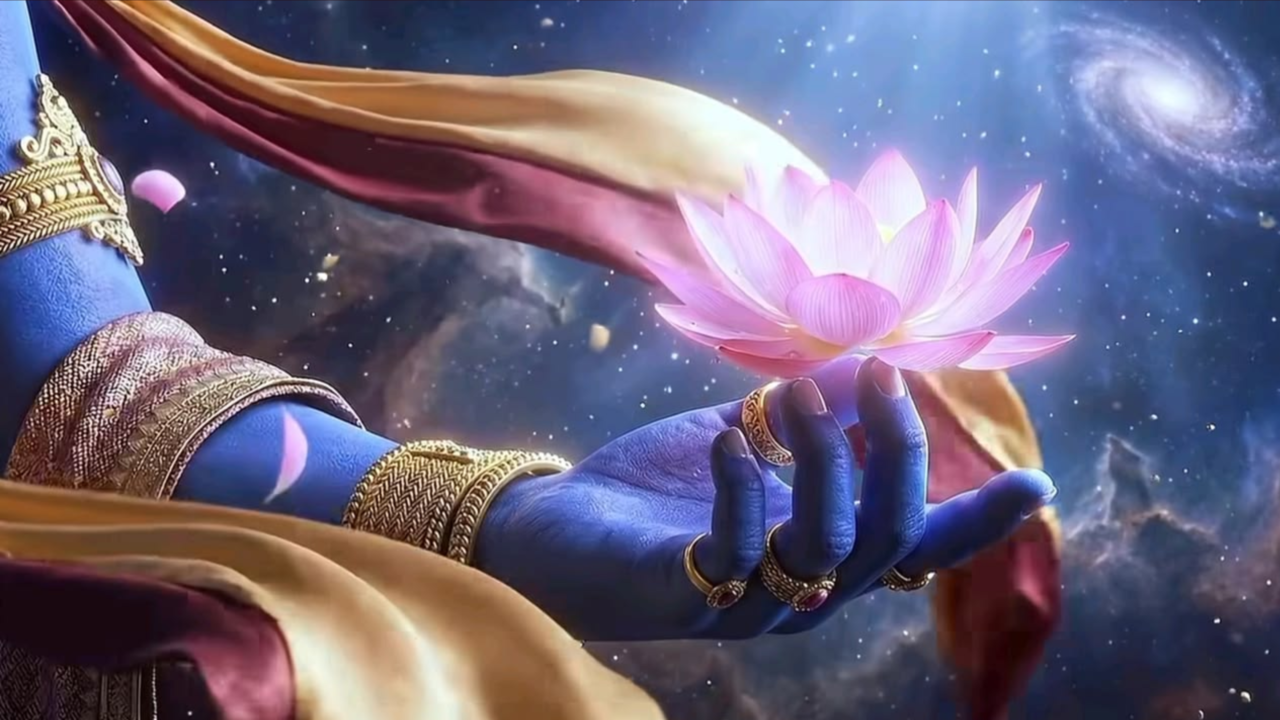
There is something almost paradoxical about Krishna. He loves deeply, plays, fights for what matters, and forms bonds that become the stuff of devotion for centuries. And yet Krishna does not seem to let anything become the entirety of who he is.
We often read spiritual detachment as not caring: becoming less emotional, less attached, less human. But Krishna points to something far more radical, the ability to participate completely without becoming imprisoned by participation.
To love without possession. To give without losing yourself. To belong without becoming owned. Perhaps that is one of the deepest teachings we can sit with this Janmashtami.
Love and Attachment
Is Love the Same as Attachment?
Attachment often disguises itself as love.
- I love you, so I need you to stay.
- I love you, so you should choose me.
- I love you, so you should understand me.
- I love you, so your happiness must include me.
Underneath many of these statements is something different from love. Fear. Fear of loss, of abandonment, of being replaced, of becoming irrelevant. Fear that if this person leaves, something essential inside me will leave with them.
Attachment says: I need you to remain a certain way so that I can remain okay. Love says: I cherish you, but I do not need to own the conditions of your existence.
That distinction is enormous. Love allows another person to be a person. Attachment turns them into a source of emotional security. And once someone becomes responsible for our sense of worth, identity, or safety, love quietly starts becoming a contract.
Does Krishna Teach Us to Love Less?
This is where detachment gets distorted. It is sometimes mistaken for indifference: do not get too attached, do not expect anything, do not need anyone, stay emotionally independent. But that can easily become another form of armour.
There is a difference between detachment and disconnection. Emotional unavailability says: I will not let myself need you, because needing you makes me vulnerable. Detachment says: I can love you deeply without making you responsible for holding me together.
This is why Krishna's teaching in the Bhagavad Gita is not simply about withdrawing from life. Arjuna is standing in the middle of a battlefield. Krishna does not tell him to walk away because life is messy. He asks him to act, to fulfil his dharma, but without making the fruits of action the condition of his inner stability.
That is a very different kind of freedom.
- Do what is yours to do.
- Love what is yours to love.
- Give what is yours to give.
- But do not hand your entire inner life over to the outcome.
Can the Person You Love Become Your Identity?
This is one of the hardest lessons in intimate relationships, especially when we have been taught that a good woman is a devoted woman. She anticipates everyone's needs, adjusts, sacrifices, forgives. And somewhere along the way, something subtle happens. Devotion becomes self-abandonment.
You stop asking what do I want, and start asking what does everyone else need from me. Your partner's mood becomes your mood. Their approval becomes your reassurance. Their attention becomes your evidence of worth. Eventually, loving someone begins to mean disappearing into them. But that is not devotion. That is the dissolution of the self.
There is a profound difference between saying I choose you, and unconsciously saying without you, I do not know who I am. The first is love. The second is dependency disguised as love.
Identity and Devotion
Why Does Krishna Refuse a Single Identity?
Perhaps this is one reason Krishna is such a fascinating figure. He refuses to fit into one identity. He is the mischievous child of Gokul, the beloved of the Gopis, the friend of Arjuna, the strategist, the statesman. He moves through radically different roles without becoming imprisoned by any single one.
There is something quietly powerful in that. Human beings often turn identities into cages. Once an identity becomes too precious, we start defending it, because the moment we step outside the role, we feel as though we are betraying ourselves. But the deeper self is not the role. The deeper self is the awareness that can move through many roles without being reduced to any one of them.
When Does Devotion Become Disappearance?
There is a particular wound many women carry quietly. They have been praised for how much they can give and tolerate. And because sacrifice is so often romanticised as proof of love, a woman may not realise when she has crossed the line from loving to abandoning herself.
But love does not require you to become smaller. You can love someone and still say no, or still leave. You can love someone and still have a life that is entirely your own. Love becomes cleaner when it is no longer mixed with the fear of losing yourself.
Letting Go and Belonging
Is Letting Go the Same as Loving Less?
This may be the hardest paradox. We sometimes believe that if we let go, we are admitting we never cared. But letting go can be an expression of profound love, because sometimes love means allowing reality to be reality.
The mind wants to freeze beautiful things. Love wants to keep. But life keeps moving. Krishna's world is full of movement. The child of Vrindavan does not remain the same Krishna forever. The beloved of the Gopis eventually leaves Vrindavan. The cowherd becomes a statesman. The playful flute-player becomes the charioteer on a battlefield.
Life keeps asking him to move into the next form. And perhaps there is something here for us. The end of one form of love does not mean the end of love itself. Sometimes what we are being asked to release is not love. It is the form in which we insisted love must remain.
What Is the Difference Between Belonging and Possession?
There is a beautiful distinction between saying you are mine, and saying I belong with you. The first contains ownership. The second contains intimacy. Ownership says you must remain. Belonging says I am here.
Holding something fully without being owned by it is a practice rather than a temperament, and Become The Magnet That Attracts Love approaches it through relationship.
Ownership needs certainty. Belonging can tolerate mystery. Ownership asks what are you to me. Belonging asks can we meet each other honestly while we are here.
This does not mean relationships should have no commitment, boundaries, or responsibility. Quite the opposite. Real love can involve profound commitment. But commitment is not possession. You can choose someone fully without believing they exist to complete you. You can build a life together without making the other person responsible for your entire sense of self. You can be deeply devoted without surrendering your sovereignty.
Acting Without Being Owned
Can You Act Without Being Imprisoned by the Result?
One of Krishna's most famous teachings in the Bhagavad Gita is the call to act without attachment to the fruits of action. It is often reduced to do not care about the result. But that misses the subtlety. Krishna is not asking Arjuna to become careless. He is asking him to separate right action from obsessive ownership of the outcome. Do what is yours to do. Give yourself to it. But recognise that the final result is never entirely yours to command.
This applies far beyond work. It applies to love. You can communicate honestly. You can show up. You can build trust and be loyal. But you cannot control another person's heart. You cannot force reciprocity or guarantee permanence.
When we try to control these things, love becomes anxiety. We stop experiencing the relationship and start monitoring it.
- Is he pulling away?
- Does she still love me?
- Why did they not reply?
- What does this mean?
- Where is this going?
The relationship is no longer something we are living. It becomes something we are constantly trying to secure.
What Does It Mean to Love Without a Prison?
Imagine being able to say: I love you deeply, and I am still myself. I choose you, and I do not abandon me. I am devoted to this relationship, and I still have a life beyond it.
That is inner freedom. And perhaps this is what makes Krishna's relationship with life so extraordinary. He is not standing outside life, untouched by it. He is inside it, loving, playing, fighting, creating, losing. And yet he is never reduced to any single experience.
What Should You Ask This Janmashtami?
Instead of asking how can I become less attached, ask what have I allowed myself to become owned by. A person? A relationship? A role? The need to be chosen? The need to be needed? The fear of being alone? The identity of being the strong one? The fantasy of how life should turn out?
And then ask: can I love this without becoming imprisoned by it? Can I participate without possessing? Can I give without abandoning myself? Can I receive without becoming dependent?
Perhaps this is one of Krishna's most radical invitations. To become free within love. To love with your whole heart without handing your whole self away. Because the goal was never to love less. It was to become free enough to love without fear.
You can belong deeply without becoming possessed by what you love.