
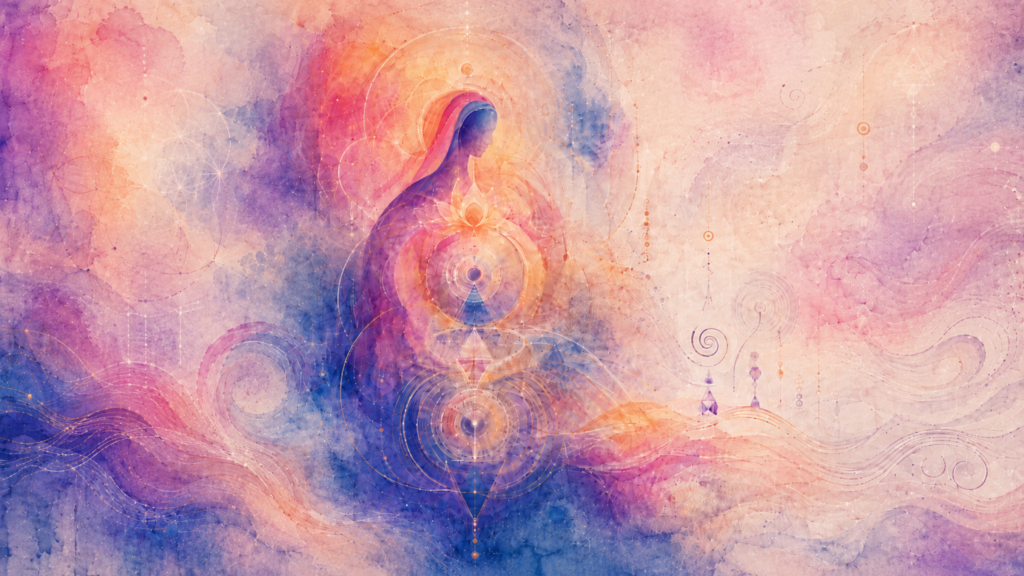
The form was never the destination
What if the human impulse to draw, make symbols, repeat patterns, chant and stare at sacred geometry is not separate from spirituality, but one of the oldest ways consciousness has tried to approach what cannot be seen?
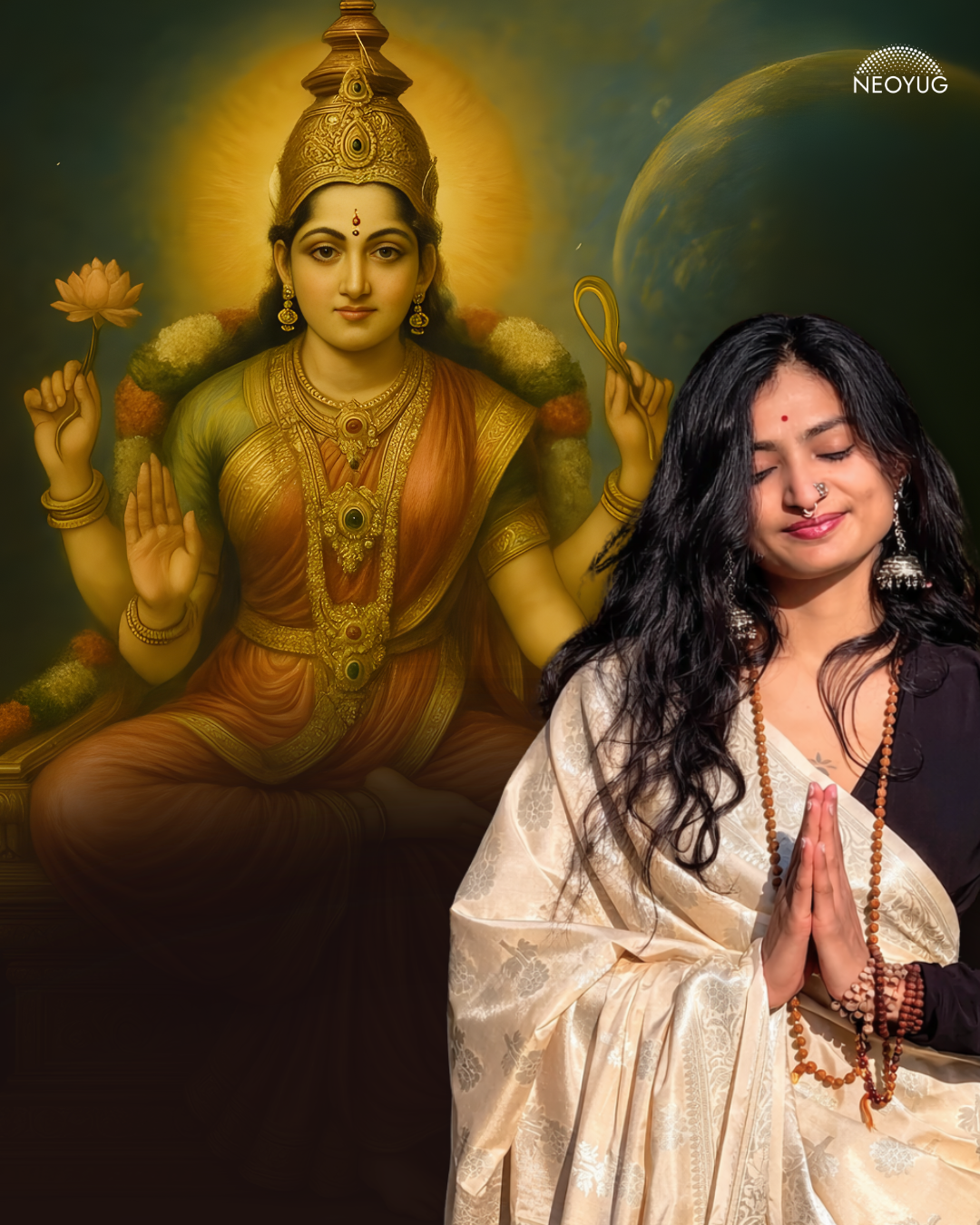
There is a strange thing about the Divine. We give Her a face, ten arms, colour. We build temples for Her, make yantras, chant Her names. And then, somewhere along the path, we begin to realise that the form was never the destination. It was a doorway.
Because how do you contemplate what has no shape? How do you listen to what makes no sound? How do you give your devotion somewhere to land?
Perhaps this is why human beings have always made images of the sacred. We are drawn to an image. And sometimes, form is how the human mind learns to approach what lies beyond form.
Before there was philosophy, there was the image
Think about the earliest human beings: animals on cave walls, circles, spirals, hands, geometric patterns. Something in us has always wanted to make the invisible visible. That impulse grew into temples, icons, mandalas, yantras, sacred architecture, painting, dance, music and mantra.
These can work as technologies of attention, ways of gathering a scattered mind and turning it towards something deeper. And this changes the question completely. Instead of asking, is this beautiful? we begin asking, what is this allowing me to experience?
What if you do not need to be an artist to experience the sacred?
Most of us were taught to separate art from spirituality. Art is something talented people do. Spirituality is something serious people do. And so, somewhere along the way, we stop creating. But intuitive spiritual art asks for something almost opposite.
Do not make something impressive. Make something honest. Do not ask, does this look good? Ask, what is trying to emerge?
That shift, from performance to perception, is profound. When you stop trying to create something beautiful for someone else to see, your attention begins turning inward. A colour keeps appearing. A shape repeats. A symbol emerges that you did not consciously plan.
And suddenly the artwork becomes less important than the relationship you developed with yourself while creating it. That is where art can begin becoming practice.
The mystery of sacred geometry
Consider something as simple as a circle. Why does the circle appear everywhere in sacred traditions? It has no obvious beginning or end. It contains, encloses, and returns to itself. Now consider the triangle, the square, the lotus, and the point, the bindu.
They can work as symbols through which enormous ideas become perceptible. The bindu can suggest the point from which multiplicity emerges. The circle can evoke wholeness. The triangle can carry different meanings depending on the tradition. The lotus can represent something arising from the depths without being defined by them.
And then there is the yantra. Look at one closely and something remarkable happens. At first you see geometry. Then you begin to notice repetition, symmetry, direction, centre, movement. Your attention becomes increasingly organised. The geometry begins doing something to the way you look. It becomes contemplation. The symbol is teaching you how to look.
And then there is sound
What if sound can become a form of art? Or more precisely, what if sound can become a doorway into an experience that thought cannot reach?
A mantra, a chant, the rhythm of breath, the vibration of your own voice, and eventually silence. The interesting thing about sound is that you experience it through your body. And eventually you stop listening to the sound. You begin noticing the silence from which the sound emerged and into which it disappears.
That is another movement from form towards formlessness. Sound becomes silence. Image becomes perception. Symbol becomes meaning. Creation becomes contemplation.
Perhaps the deepest art is learning to listen
We think creativity means expressing something from ourselves. But some of the deepest creative processes feel less like expression and more like listening.
You pick up a pencil. You do not know what you are going to draw. You begin. You follow something subtle, a movement, a colour, an impulse. You are allowing something to reveal itself.
This is why intuitive creation can become surprisingly intimate. Because eventually you are no longer asking, what should I make? You are asking, what am I noticing? And then, what is this showing me? That question can take you much deeper than art.
The Devi you meet may not look like the Devi you expected
When we approach Devi through established imagery, we already know what we are supposed to see. We know Her colours, weapons and ornaments. But what happens when you are given a blank page, and just your attention?
You may discover that what emerges is nothing like the image you carried in your head. Perhaps your Devi appears as a colour, a shape, a face, a geometric pattern, or a single word. Or perhaps nothing appears at all, and that too can be part of the practice.
Because the purpose is not to manufacture an experience of Devi. It is to become sensitive enough to notice what is already happening within you.
From seeing Devi to experiencing Devi
This is where the movement from form to formless becomes truly interesting. At the beginning you may need something to look at, something your mind can hold. Then gradually the relationship changes.
You look at the form, contemplate it, create through the form, listen through the form. And eventually you may discover that what you were searching for was never entirely contained inside the form.
The image was pointing beyond itself. The symbol was pointing beyond itself. The sound was pointing beyond itself. Even the artwork was pointing beyond itself. The finger was never the moon. It was showing you where to look.
What if your creativity is not asking to become art?
What if it is asking to become attention? That changes everything. Because the real transformation is not necessarily in what you create. It is in who you become while creating.
More attentive. More receptive. Less performative. More comfortable with uncertainty. More capable of sitting with what has no immediate explanation. And perhaps, slowly, more intimate with the sacred.
Five doorways, one movement
There are many ways to approach Devi.
- Through form, we learn to see.
- Through geometry, we learn to perceive pattern and order.
- Through symbol, we learn to listen to meaning.
- Through sound, we learn to experience vibration.
- Through reflection and inner listening, we begin to encounter what cannot be represented.
And perhaps this is the real journey. We begin by making something. Then we begin observing. Then listening. Then feeling. And eventually we become quiet enough to experience what cannot be made. That is the movement from form to formlessness.
Learning to recognise that the form can carry us beyond itself. A Devi image can become a meditation. A geometric pattern can become a mirror. A symbol can become a question. A sound can become silence. And art can become sadhana.
Perhaps the invitation is not to become an artist at all. Perhaps it is simply to become a little more willing to see, create, listen and receive. Because sometimes the doorway to the Divine does not look like a doorway. Sometimes it looks like a blank page. And the question is simply, what will you allow to emerge?
 Google